Litchfield Ledger 
Nature, people, and happenings of our region. A free Tuesday newsletter full of weekly events + stories about nature, history, and people.
3,970 locals reading •+2 joined this week
 This WeekCalendar
View all events - OCT 14One People: Portraits of the Early Republic Exhibition Wed · 11:00 AM•Litchfield, CT
- OCT 17Scarecrows in the Meadow Sat · 8:00 AM•Litchfield, CT
- OCT 17West Cornwall Farm Market – Wish House Sat · 10:00 AM•West Cornwall, CT
- OCT 17Warren OctoberFest Sat · 10:30 AM•Warren Woods, CT
- OCT 17Stories to Keep You Up at Night - Lantern Tour Sat · 5:30 PM•Litchfield, CT
- OCT 17Washington Farmers Market Sat•Washington Depot, CT

Fall 2026 · The guide
Fall Foliage in Litchfield County
When the leaves peak town by town, the drives worth taking, the overlooks worth the climb, and where to pick apples after.
Read the foliage guide  Weekly JournalsWeekly Journal
All issues 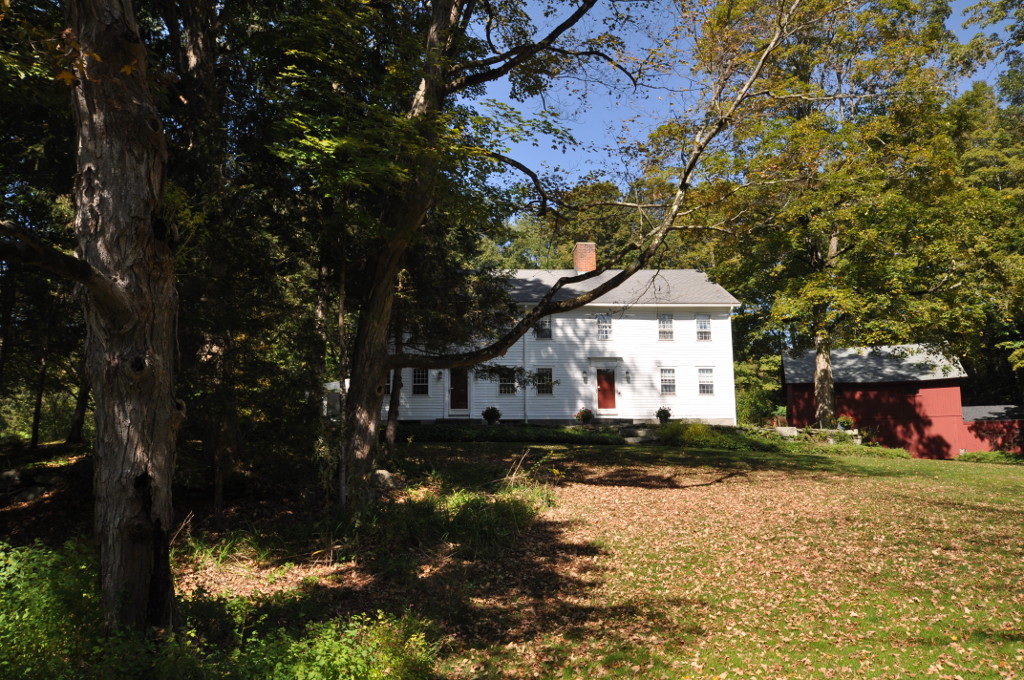

Latest Issue
All issuesA 1748 house in Washington became a stagecoach inn with a ballroom upstairs. Plus a walk at Johnson Farm and the Clay Way Studio Tour.
This week: Washington! In 1748, John Logan built a house where four roads meet in Nettleton Hollow. For most of the 1800s, it was the Rising Sun, a stagecoach inn with a ballroom upstairs. Saturday's talk there is full, but one of its speakers leads a tour at the Gunn Museum that afternoon.
Patrick
The Litchfield Ledger


The Inn at the Top of Nettleton Hollow
Saturday morning the Gunn Museum gives a talk on Washington's old turnpikes and the inn that stood on one of them. The talk is held at the inn itself, still a Logan family home, and all 30 seats are taken. The house may be the oldest in town.
Who built it?
John Logan. He and his wife Margaret came to Judea, the parish that became Washington, in 1738. In 1748 he built a house a story and a half tall, five windows across, with a lean-to at the back.
The house sits at the north end of Nettleton Hollow, where Romford, Old Litchfield, Nettleton Hollow and Sunny Ridge roads meet. Crossroads drew taverns. Around 1790 a second one opened across the way at 20 Nettleton Hollow Road, a smaller post house.
What were the turnpikes?
After the Revolution, Connecticut's roads were in poor shape and the towns had spent their money on the war. The state let private companies build roads and charge tolls. Between 1792 and 1839 it chartered about 100 of them, and they built some 1,600 miles of road. The name came from the gate, a set of poles, or pikes, on a center post that turned to let a paying traveler through.
Washington got several. The Washington Turnpike, chartered in 1803, ran from Woodbury through Washington Depot and over Baldwin Hill to New Preston. Most of it is Route 47 now. In 1805 the state chartered the Cornwall and Washington Turnpike. It ran from Cornwall through Romford and down Nettleton Hollow Road toward Woodbury, past the Logans' door. Parts of it now lie under the Shepaug reservoirs.
Few of these roads paid off. Only about 20 of Connecticut's turnpikes ever returned a steady profit to their shareholders.
What was the Rising Sun?
The Logan house became the Inn of the Rising Sun. Stagecoaches carried passengers and mail on the turnpikes and stopped at taverns every 12 to 18 miles. A stage register from 1827 listed 26 routes in and through Connecticut.
In the first half of the 1800s Matthew Logan, one of several by that name, made the inn bigger. He added three bays on the north side and raised the roof to two full stories. The new upstairs held a ballroom. He also built an ell. Local people gathered there as well as travelers.
In 1848 the builders Lewis and Daniel Canfield put up a matched pair of Greek Revival houses on Sunny Ridge Road. One cost $1,250, not counting materials. Its owner, Russell Bloss, also fed and boarded the crew while they worked.
What ended it?
The railroad. Trains came to the area in the 1870s and the stage traffic fell off. As the inn lost its trade, the road in front was moved away from the house. That left the wide lawn it has today. The old roadbed still shows as a clearing in the trees, lined with stone walls.
What is left?
The crossroads is now the Sunny Ridge Historic District, listed on the National Register in 1995. The inn is still a Logan family home and is not open to the public.
The Gunn Museum is at 5 Wykeham Road in Washington. Kenyon Clark, one of Saturday's speakers, leads a tour there at 1 PM.

🕯️ Wednesday the 14th
Woodbury Public Library, Woodbury – Poetry Open Mic Night with Woodbury poet laureate Katie Baker. Read your own work or a poem you love, or just listen. This month's theme is destiny. 6:00 PM – 7:30 PM READ OR LISTEN
🦇 Thursday the 15th
Johnson Farm Preserve, Washington – Fall Saunters. Steep Rock Association director Brian Hagenbuch leads a guided autumn stroll across the farm's fields and meadows. Registration required. 37 West Mountain Road. 5:00 PM – 6:30 PM WALK THE FARM
🎃 Friday the 16th
Infinity Music Hall, Norfolk – Asleep at the Wheel. The Western swing band formed in 1970 and has won 10 Grammys. 20 Greenwoods Road West. 8:00 PM SEE THE BAND
👻 Saturday the 17th
Halloween Party - Bryan Memorial Town Hall, Washington Depot – The Washington Art Association's Halloween Party, a fundraiser for the gallery and its classes. Costumes encouraged. Catered Halloween menu, drinks, music, games for kids, and a raffle that includes a private after-hours tour of the Met. $125. Tarot readings sold separately. 2 Bryan Hall Plaza. 6:00 PM – 9:00 PM GET YOUR COSTUME READY
🕸️ Sunday the 18th
Studios across the Northwest Corner – The Clay Way Studio Tour. Twenty-five ceramic artists open nine studios in western Connecticut and Dutchess County. Maps at clayway.net. Also Saturday. 10:00 AM – 5:00 PM PLAN YOUR ROUTE
That is one pick a day. The full list, including Warren OctoberFest and the Run & Wag 5K in Cornwall, is on the website.

A few poll respondents mentioned they didn’t know the Ledger was on Instagram! It is. Photographs of the county between issues, plus events that don’t make the newsletter.


Show your business to thousands of Litchfield locals. Email Patrick at patrick@litchfieldledger.com.
Get this in your inbox every Tuesday.
Free, every Tuesday. Unsubscribe anytime.